
Laundry buying guide

Laundry Appliances Buying Guide
Choosing the right laundry appliances can make a big difference to how efficiently your home runs. Whether you are replacing an old washing machine, upgrading your tumble dryer, planning a new utility room or looking for a space-saving washer dryer, modern laundry appliances are designed to make washing and drying easier, quieter and more energy efficient.
From freestanding washing machines and integrated washing machines to heat pump tumble dryers, condenser dryers and washer dryers, today’s laundry appliances offer a wide range of programmes, capacities and fabric-care features to suit different households. By understanding the different appliance types, key features and installation requirements, you can choose the best laundry solution for your home.
Understanding Laundry Appliance Types
Modern laundry appliances are available in several formats, depending on how much space you have, how often you wash and whether you prefer separate washing and drying appliances.
Washing machines are the main laundry appliance in most UK homes. They are designed to clean everyday clothing, bedding, towels and delicate fabrics, with programmes for cottons, synthetics, wool, sportswear, quick washes and more. Popular options include freestanding washing machines, integrated washing machines, large-capacity washing machines and energy efficient washing machines.
Tumble dryers are ideal for homes where outdoor drying is limited or where you need laundry dried quickly and conveniently. Heat pump tumble dryers are increasingly popular in the UK because they use lower drying temperatures and are usually more energy efficient than traditional condenser or vented dryers.
Washer dryers combine washing and drying in one appliance, making them a practical choice for flats, smaller kitchens and homes without space for two separate machines. They are useful for occasional drying, although separate washing machines and tumble dryers usually offer better drying capacity and overall performance.
Integrated laundry appliances are built behind a kitchen cabinet door to create a neat, hidden finish. Integrated washing machines and integrated washer dryers are commonly used in fitted kitchens where appearance and continuity are important.
Freestanding laundry appliances are easier to install, replace and move. Freestanding washing machines and freestanding tumble dryers are available in a wider choice of sizes, capacities and specifications, making them a popular option for kitchens, garages and utility rooms.
Choosing Between Integrated & Freestanding Laundry Appliances
The choice between integrated and freestanding laundry appliances depends on your kitchen layout, available space and preferred appearance.
Integrated washing machines and washer dryers sit behind a furniture door, helping maintain a clean and coordinated kitchen design. They are ideal for fitted kitchens where you want the appliance hidden from view. However, integrated laundry appliances usually have slightly fewer size and model options than freestanding appliances, and installation needs to be checked carefully.
Freestanding washing machines and tumble dryers offer more flexibility. They can be installed under a worktop, placed in a utility room or used in other suitable areas with the correct plumbing, drainage and ventilation. Freestanding models are often easier to replace and usually offer a wider choice of drum sizes, spin speeds and features.
For many UK homes, the best choice comes down to whether appearance or flexibility is more important. Integrated appliances are best for a seamless fitted look, while freestanding appliances are often better for capacity, value and choice.
Tumble Dryer Types Explained
Choosing the right tumble dryer is especially important, as different dryer types work in different ways.
Heat pump tumble dryers are among the most energy efficient tumble dryers available. They reuse warm air during the drying cycle, helping reduce electricity use compared with many traditional dryers. They also dry at lower temperatures, which can be gentler on fabrics. Drying times can be longer, but running costs are usually lower.
Condenser tumble dryers collect moisture from clothes into a water container or drain it away if connected to a suitable outlet. They do not need a wall vent, which makes them easier to position than vented dryers. They are often less expensive to buy than heat pump models, but usually use more energy.
Vented tumble dryers remove damp air through a hose to the outside of the property. They can dry quickly, but they need suitable external ventilation and are less common in many modern UK kitchens and utility rooms.
When choosing a tumble dryer, consider where it will be installed, how often you dry clothes, energy efficiency, noise level and whether you have the option to drain condensed water directly into a waste pipe.
Laundry Features & Washing Technology
Modern laundry appliances include a wide range of features designed to improve cleaning performance, fabric care, convenience and energy efficiency.
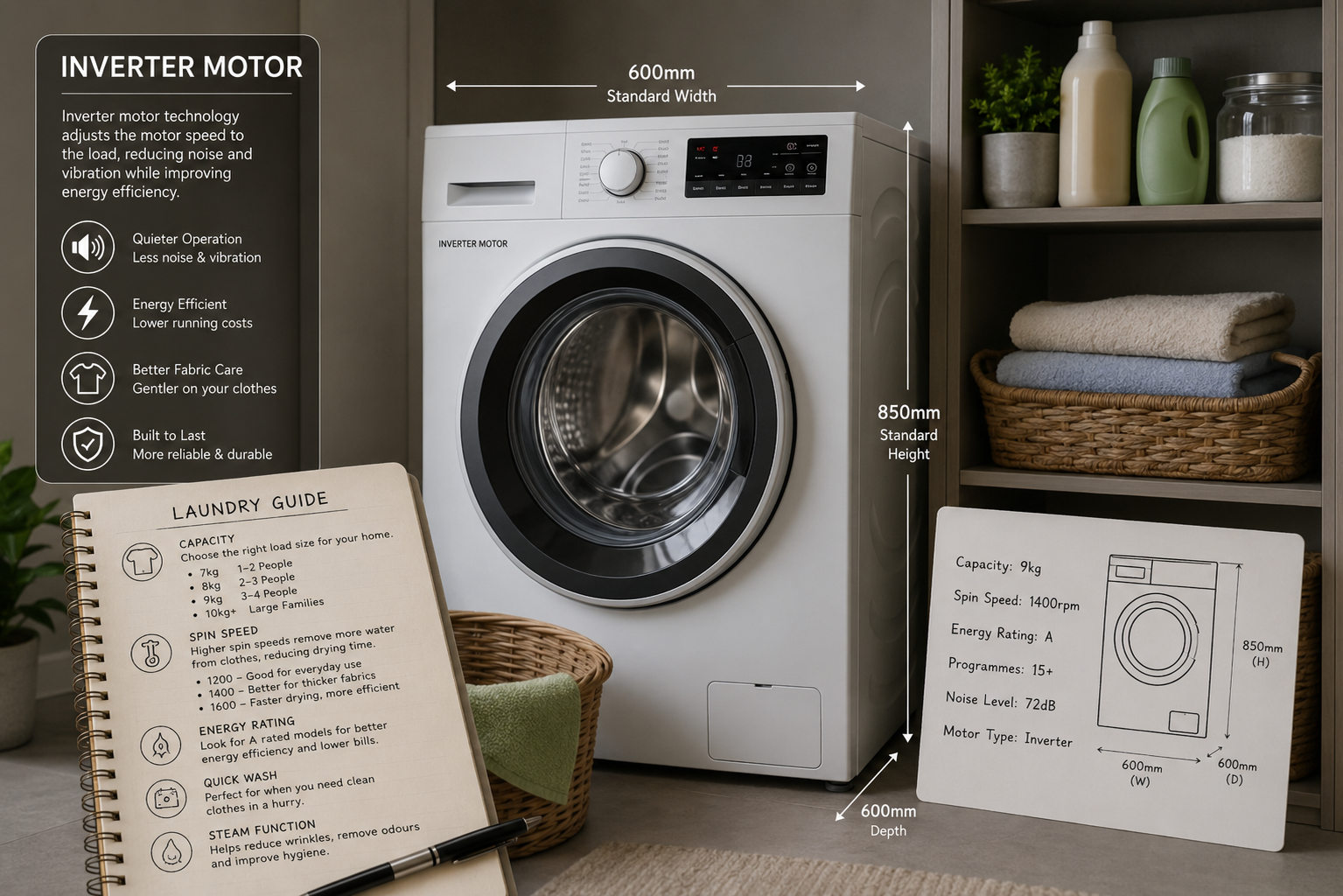
Drum capacity is one of the most important considerations. A 7kg or 8kg washing machine may suit smaller households, while 9kg, 10kg or larger washing machines are often better for families, bedding and larger laundry loads.
Spin speed affects how much water is removed at the end of the wash. Common spin speeds include 1200rpm, 1400rpm and 1600rpm. A faster spin can help reduce drying time, although some delicate fabrics may need a gentler setting.
Quick wash programmes are useful for lightly soiled clothing when you need items cleaned quickly. These are convenient for everyday use, but full cotton or eco programmes are usually better for larger or more heavily soiled loads.
Eco programmes are designed to reduce energy and water consumption. They often take longer than standard washes, but can be more efficient for regular laundry.
Many modern washing machines, tumble dryers and washer dryers may also include:
• Large-capacity drums for family laundry
• Automatic load sensing to adjust water and energy use
• Steam programmes to help refresh clothes and reduce creasing
• Wool, delicates and hand-wash cycles
• Anti-allergy or hygiene programmes
• Delay start timers
• Digital displays and time remaining indicators
• Quiet inverter motors
• Smart app control on selected models
• Sensor drying on tumble dryers
• Reverse tumble action to help reduce tangling
Size, Capacity & Installation Considerations
Before buying a washing machine, tumble dryer or washer dryer, it is important to check both the appliance dimensions and the installation space available.
Most UK washing machines are designed to fit under a standard kitchen worktop, but depth can vary, especially on larger-capacity models. Always check the width, height and depth of the appliance, as well as any extra space needed for hoses, plugs and ventilation.
Before choosing a laundry appliance, consider:
• Available space and appliance dimensions
• Whether you need freestanding or integrated installation
• Plumbing and drainage requirements
• Electrical socket position
• Door opening direction and clearance
• Drum capacity for your household size
• Noise levels, especially in open-plan homes
• Energy efficiency rating and running costs
• Whether a tumble dryer needs ventilation, water collection or drainage
• Access for delivery and installation
For integrated laundry appliances, it is also important to check cabinet door fittings, plinth clearance and whether the appliance is suitable for the existing kitchen furniture setup.
Energy Efficiency & Running Costs
Energy efficiency is an important consideration when buying laundry appliances in the UK, especially for appliances used several times a week.
Energy efficient washing machines use less electricity and water while still delivering strong cleaning performance. Larger drum capacities can also be efficient when used correctly, as fewer washes may be needed for bigger loads.
Heat pump tumble dryers are often the most energy efficient option for drying laundry indoors. They usually cost more to buy than condenser dryers, but the lower energy use can make them a strong long-term choice for regular drying.
Washer dryers can be convenient, but they often have a smaller drying capacity than washing capacity. For example, a washer dryer may wash 9kg but dry a smaller load. This means you may need to remove part of the wash before starting the drying cycle.
Finding the Best Laundry Appliances for Your Home
The best laundry appliances should suit your home, your washing routine and the space available. A large-capacity washing machine is ideal for busy family households, while an integrated washing machine can help create a neat, built-in kitchen design. Heat pump tumble dryers are a strong choice for energy efficient drying, and washer dryers are a practical solution where space is limited.
When comparing laundry appliances, think carefully about capacity, energy efficiency, noise levels, drying requirements, installation type and the programmes you will actually use. A well-chosen washing machine, tumble dryer or washer dryer can save time, reduce running costs and make everyday laundry much easier.
By choosing the right laundry appliance for your home, you can enjoy reliable washing and drying performance, better fabric care and a more convenient laundry routine.
About the Author


Quooker Free Installation Promotion
October 13, 2022

Manufacturer Promotional Terms and Conditions
November 12, 2022


Are Instant Boiling Water Taps The New Kettle?
June 17, 2022

Kitchen Trends
November 1, 2021

Dishwasher buying guide
May 15, 2026
Laundry buying guide
May 15, 2026

Refrigeration buying guide
May 15, 2026

Cooking appliances buying guide
May 6, 2026

Why Choose Lacanche?
April 12, 2024
