
Cooking appliances buying guide

Cooking Appliances Buying Guide
Choosing the right cooking appliances plays a key role in how your kitchen looks, feels and performs. Whether you're upgrading existing appliances or designing a new space, the options available today offer far more than just basic functionality. From advanced cooking technology to flexible layouts, modern appliances are designed to support a wide range of cooking styles and everyday needs. By understanding the different types, fuel options and features available, you can create a kitchen that works seamlessly for you.
Understanding Fuel Types
Cooking appliances are powered in different ways, and each option offers its own benefits
depending on your preferences and home setup. Gas appliances are favoured for their responsive heat control, allowing you to quickly adjust temperatures while cooking. This makes them particularly popular with those who enjoy hands-on cooking.
Electric appliances are commonly used in ovens and provide steady, reliable heat, making
them ideal for baking and roasting where consistency is key.
Induction hobs use modern technology to heat cookware directly rather than the surface
itself. This results in faster heating, improved energy efficiency and a safer cooking
environment, as the hob remains relatively cool.
LPG (liquefied petroleum gas) is often used in homes without access to mains gas, offering similar performance to natural gas appliances. Some kitchens benefit from dual fuel setups, combining different power sources to take advantage of their individual strengths.
Choosing the Right Appliance Style
The style of appliance you choose will influence both the look and functionality of your
kitchen. Built-in appliances are installed within kitchen units, creating a streamlined and integrated appearance. They’re a popular choice for modern kitchens and allow for flexible positioning, such as installing ovens at eye level. Freestanding cookers combine an oven and hob into one unit. They’re practical, easy to install and well-suited to kitchens where space or layout may be more limited. Range cookers are larger statement appliances that typically include multiple ovens and a wider cooking surface. They’re ideal for those who need extra capacity or enjoy cooking for family and guests.
Features That Enhance Cooking
Today’s cooking appliances come with a wide range of features designed to improve both
performance and convenience. Multifunction ovens allow you to switch between different cooking methods, such as fanassisted cooking, conventional heat and grilling. This flexibility helps you achieve better results across a variety of dishes.
Steam-assisted cooking introduces moisture during the cooking process, which can help
retain flavour and texture while preventing food from drying out. It’s particularly useful for baking and roasting. Combination appliances bring together multiple functions—such as microwave, grill and oven—in one unit. These are especially useful in kitchens where space is limited or flexibility is important. Cleaning has also become much more convenient thanks to modern innovations:
-Pyrolytic cleaning uses very high temperatures to break down food residue into ash
-Catalytic liners help absorb and reduce grease during cooking
-Steam cleaning functions soften residue, making it easier to wipe away
Many appliances now also include digital controls, programmable settings and smart
features, helping you manage cooking times and temperatures with greater accuracy.
Size, Capacity & Practical Considerations
Selecting the right size appliance is essential for both practicality and performance.
Single ovens are well suited to smaller kitchens or households
Double ovens offer added flexibility, allowing you to cook multiple dishes at once
Larger appliances, such as range cookers, provide greater capacity for busy kitchens
When making your decision, it’s also worth considering:
The space available in your kitchen
Installation requirements for different fuel types
Energy efficiency and running costs
These factors can make a significant difference in how well your appliances fit into your daily routine.
Finding the Right Fit for Your Kitchen
The best cooking appliances are those that align with how you use your kitchen.
If you prioritise speed and efficiency, modern electric and induction options are worth
considering. If you prefer a more traditional cooking experience, gas appliances may suit you better. For a clean, integrated look, built-in appliances are ideal, while larger households may benefit from the versatility of a range cooker.
By taking the time to consider your cooking habits, space and preferences, you can choose appliances that not only meet your needs—but elevate your entire kitchen experience.
Cooking Appliances Size & Fitting Guide
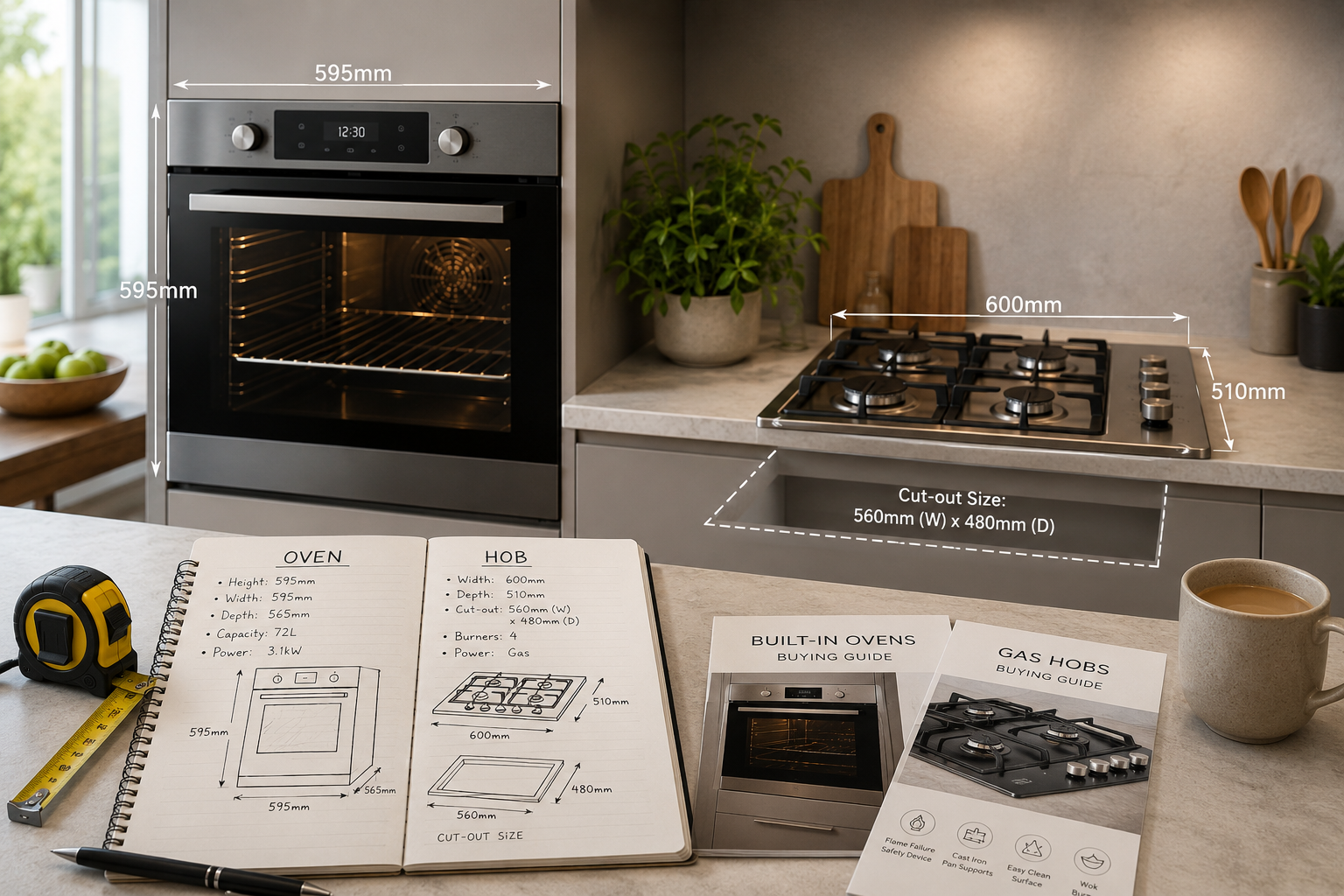
When selecting cooking appliances, ensuring the right size is crucial. While many appliances follow common UK kitchen dimensions, slight variations between models and brands mean you need to double-check all measurements.
By paying attention to width, height, depth, and clearances, you can avoid installation issues and create a seamless fit.
Standard Sizes and Why They Matter
In the UK, many kitchen units are based on a 600mm width. Most built-in ovens, for
instance, are designed to fit into these standard units. That said, while widths are often
uniform, heights and depths can vary. Always verify the exact product dimensions and
ensure there’s room for ventilation and connections.
???? Built-In Ovens: What to Measure
Built-in ovens typically fit into 600mm wide units. Depth usually falls between 55–58cm, and height varies depending on the type. Single ovens often measure about 60cm tall, while compact versions sit closer to 45cm, and double ovens may reach around 90cm. Be sure to measure the internal cabinet space, not just the appliance exterior.
Freestanding Cookers: Space Planning
Freestanding cookers offer a simple, integrated solution. They usually range between 50cm to 60cm in width, with a height around 90cm, often with adjustable feet for a perfect fit. The depth usually aligns with standard worktops, around 60cm. Always measure the space between units to ensure a snug fit, and allow space above for safe ventilation.
Range Cookers: Preparing for Larger Spaces
Range cookers are bigger investments and need more precise planning. They come in widths such as 90cm, 100cm, and 110cm, making them a standout focal point in the kitchen. Before choosing one, measure the total width between cabinets or walls, and allow a bit of extra
clearance for airflow. Don’t forget to check delivery access for large appliances.
Hob Cut-Out Sizes
Hobs can look similar on the surface, but the worktop cut-out size is crucial. Common hob
widths include 60cm, 70cm, and 90cm, but the exact opening in your worktop must match the manufacturer’s cut-out instructions. Also, ensure there’s sufficient space below for connections and airflow.
Worktop Materials and Thickness
Your worktop material can affect how appliances fit and are supported. Whether it’s
laminate, quartz, or solid wood, thicker surfaces might alter the depth needed for hobs or
built-ins.
Measuring Tips Before Buying
Accurate measurements are essential. Measure width between cabinets, height from the
floor to the worktop, and depth from front to back. It’s also wise to measure in multiple
places, as walls or cabinetry might not be perfectly straight. And always consult the
appliance manual for precise fitting guidance.
✅ Final Checklist Before Purchase
Even with standard sizes, every kitchen and appliance pairing is different. Before making
your final decision, it’s worth double-checking a few key points to avoid any issues during
installation.
Confirm all cut-out and internal dimensions, not just the external appliance size
Allow for ventilation space and clearances around the appliance
Check depth requirements, including room for cables, pipework or connections
Ensure compatibility with your existing kitchen layout and worktop thickness
Consider access for delivery and installation, especially for larger appliances
Review the manufacturer’s installation guidelines for the specific model
Taking a few extra measurements and checks beforehand can help ensure your new
appliance fits correctly, functions safely, and integrates seamlessly into your kitchen.
About the Author


Quooker Free Installation Promotion
October 13, 2022

Manufacturer Promotional Terms and Conditions
November 12, 2022


Are Instant Boiling Water Taps The New Kettle?
June 17, 2022

Kitchen Trends
November 1, 2021
Dishwasher buying guide
May 15, 2026

Laundry buying guide
May 15, 2026

Refrigeration buying guide
May 15, 2026
Cooking appliances buying guide
May 6, 2026

Why Choose Lacanche?
April 12, 2024
